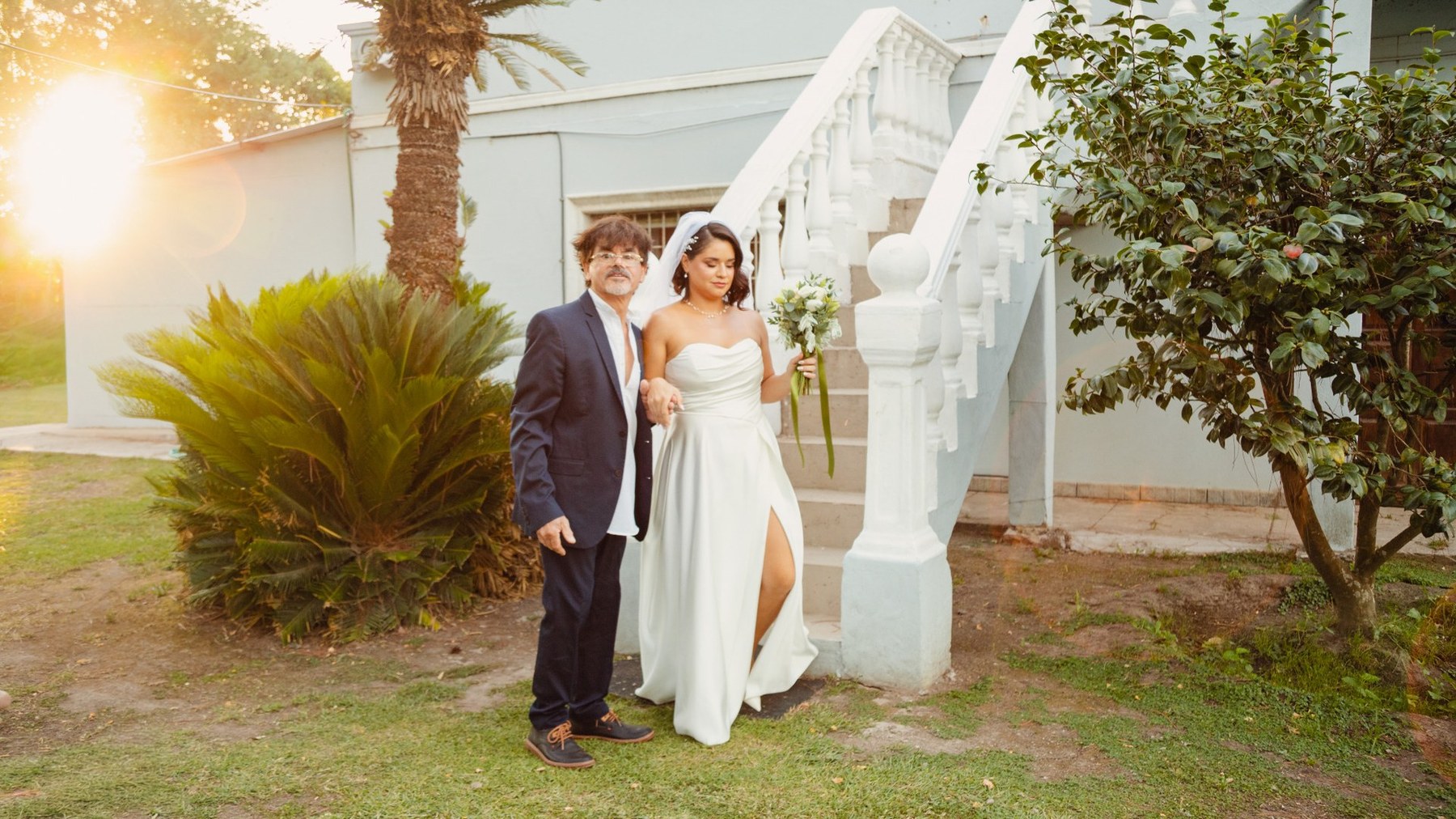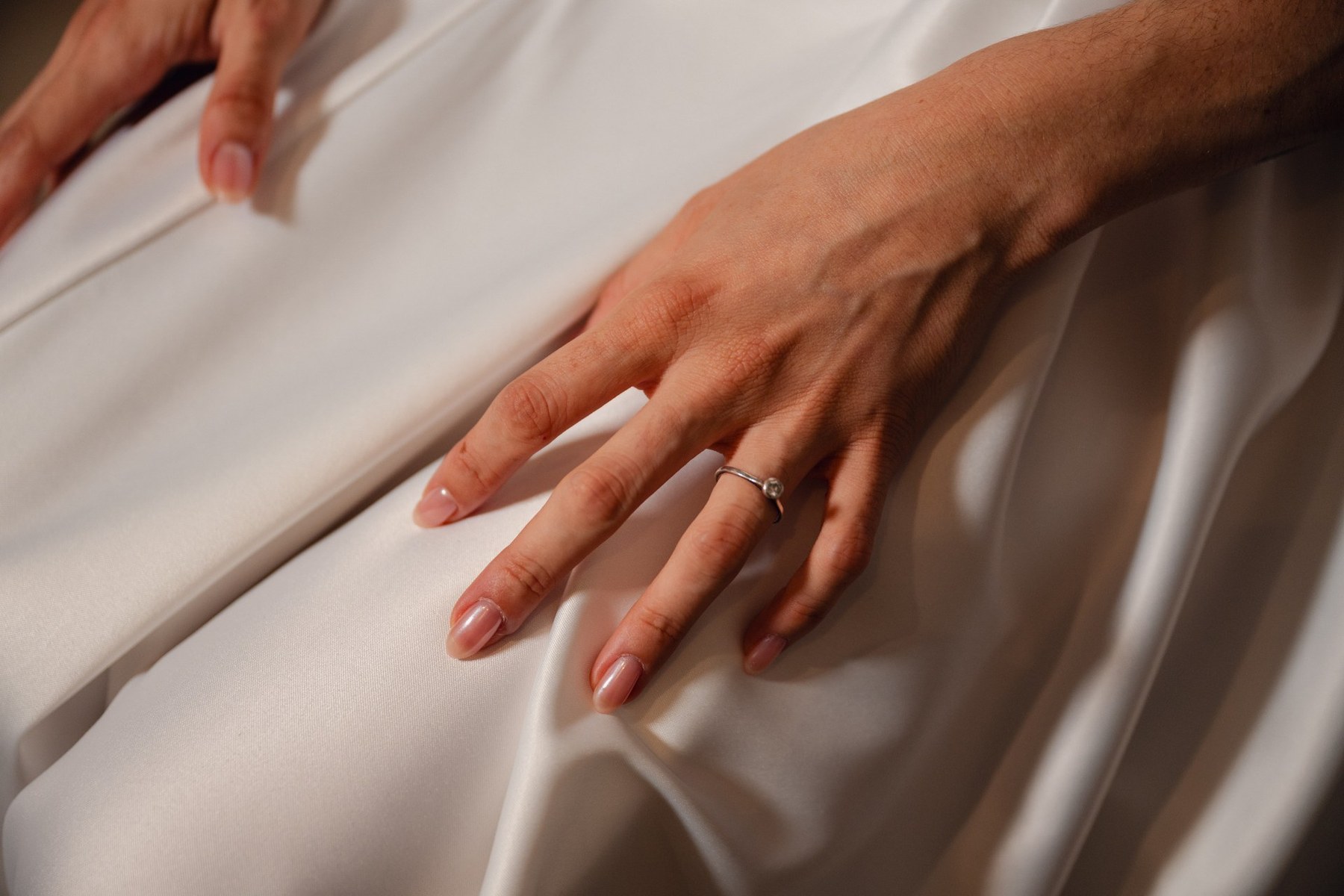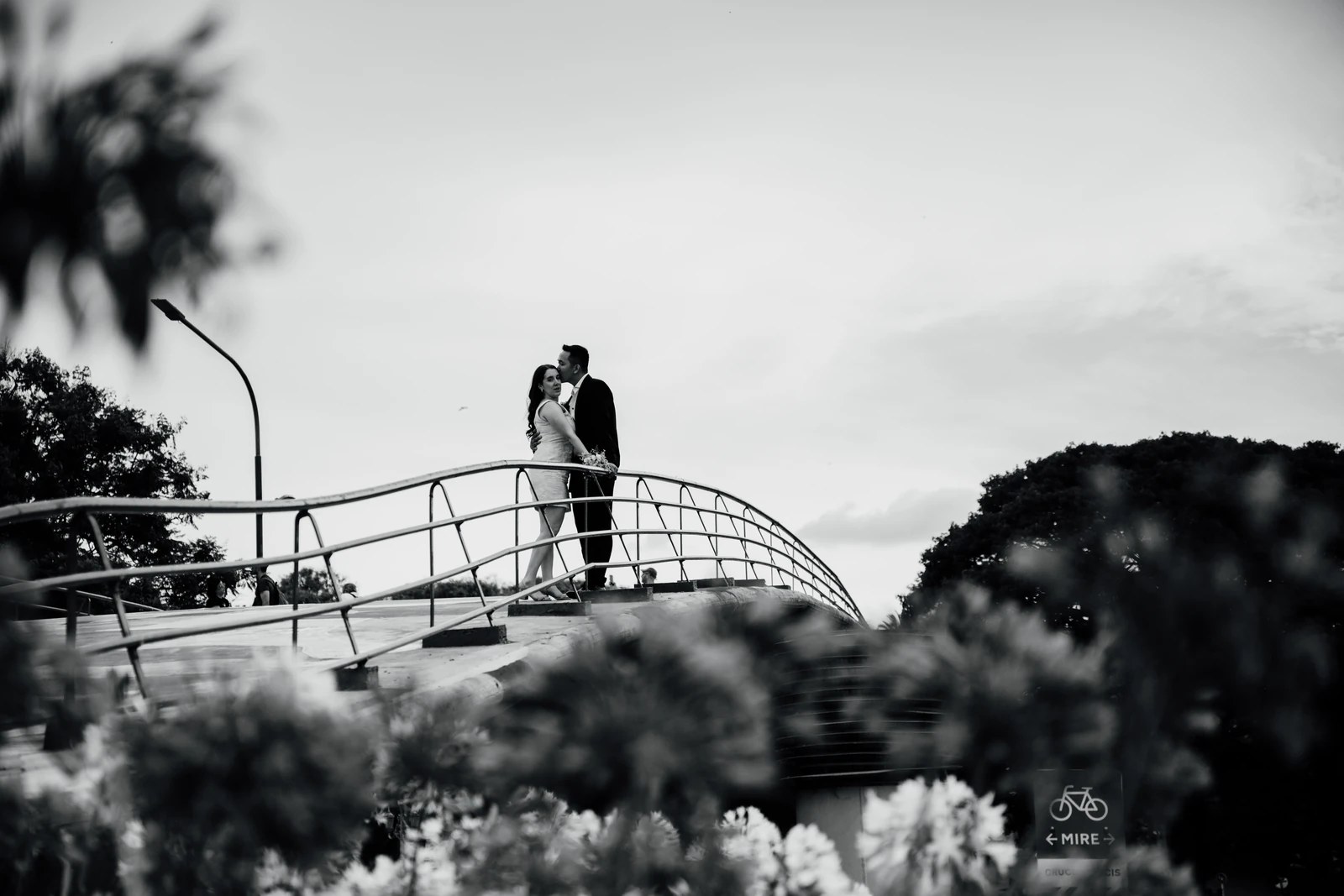
Getting ready is the day's first visual chapter. It brings nerves, quiet moments, family coming and going, makeup, clothes, messages and small encounters that later become part of the story.
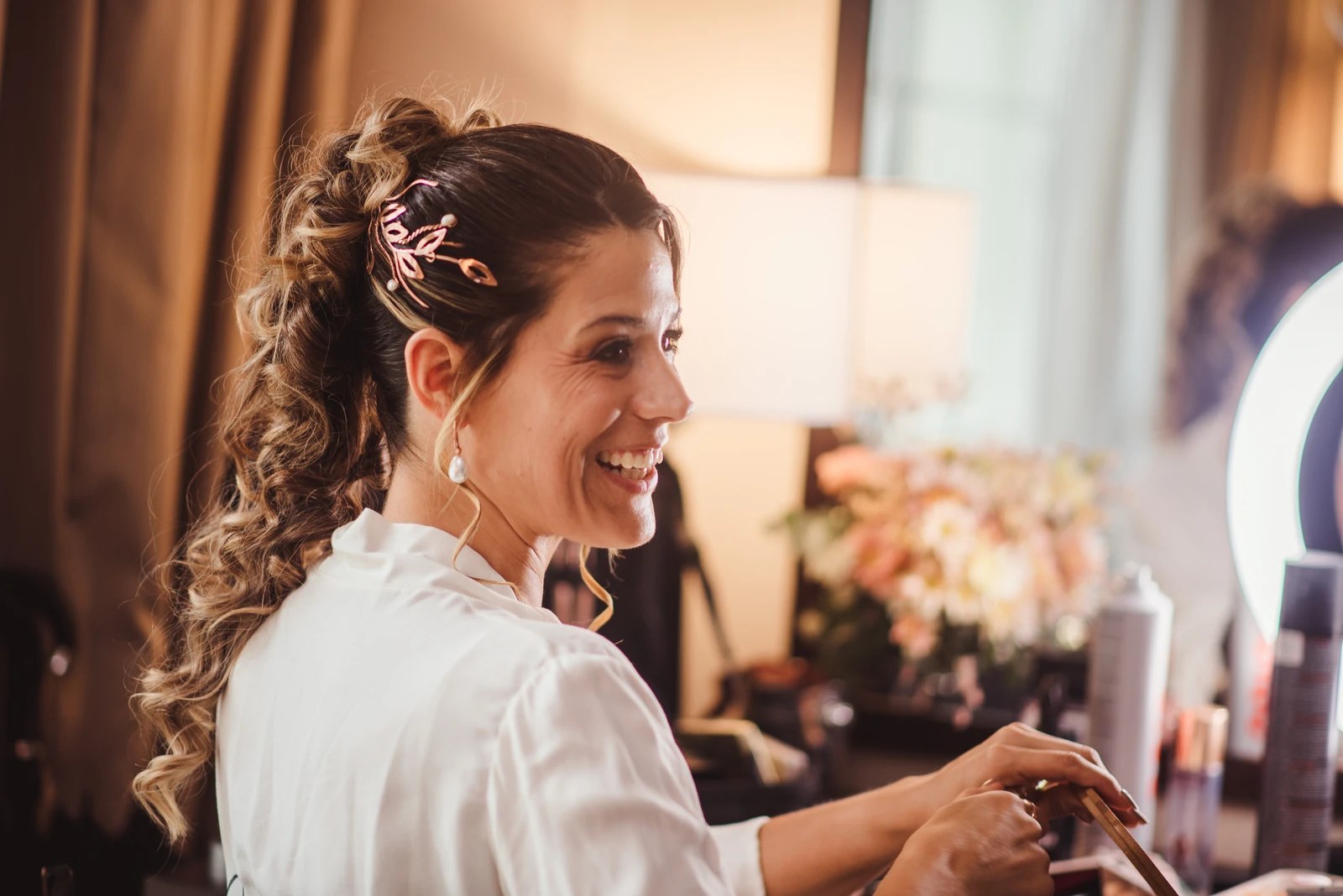
What to have ready before the photographer arrives
Gather in one place whatever you truly want photographed: dress, suit, shoes, rings, bouquet, perfume or a meaningful object. There is no need for twenty objects just because detail photos are fashionable.
It also helps to clear an area of the room, so bags, bottles and packaging do not appear behind every photo.

Light matters more than room size
A small room with a good window can work better than a huge space with difficult lighting. If there is a choice, I would choose light and calm over square metres.
How much time to allow
For simple coverage, 45 to 60 minutes may be enough. With makeup, dressing, important family members, details and some portraits before leaving, 75 to 90 minutes gives more breathing room.

Not everything needs to be spontaneous
After documenting what is happening, five minutes for a clean portrait can make sense. The key is for that time not to delay preparations or turn the whole morning into a session.
A common mistake: an overly tight schedule
If the photographer arrives exactly when you need to leave, any makeup or wardrobe delay removes the chance to photograph calmly. I prefer a small buffer and time to spare rather than relying on one exact minute.
To plan the rest of the day, also see the guide to a wedding photography timeline.
If you'd like to review coverage timing for your date, you can ask me about availability.